We are thrilled to announce that Sew to Flow has been awarded Best Social Project during the General Assembly of Rotaract Nederland! As part of this recognition, the project received a prize of €250, celebrating its meaningful impact and innovative approach to social change. Our …
🌍✈️ Meet Dunja Hippe: Flight Attendant with a Heart for Service 💙 Hi all! I’m Dunja Hippe, 26 years old and currently living in Voorburg after moving five times in the past six years. I originally grew up in the beautiful province of Overijssel, but …
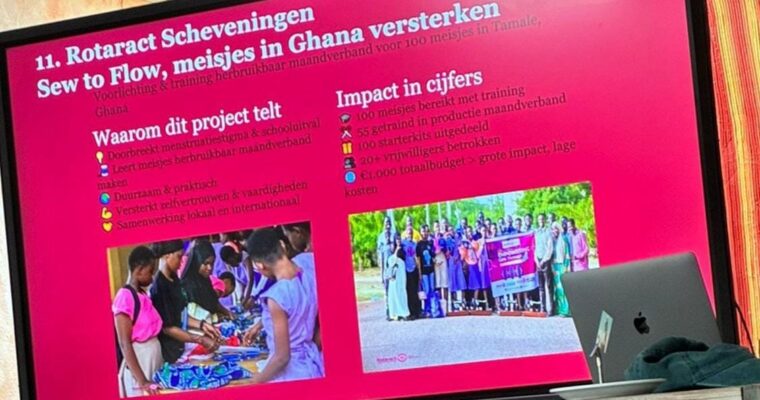
Sew to Flow is a joint project led by the Rotaract Clubs of UDS Tamale and Scheveningen, Rotary Clubs of Pulchri and Scheveningen, and the Ummy Relief Foundation. On April 9th, 2025, the project was held at Dabokpa Technical Institute in Tamale, Ghana, with the aim of equipping young girls—mainly Fashion & Design students—with knowledge about menstrual hygiene and hands-on training in reusable pad production. In total, 100 girls were reached through education and awareness, and 55 were practically trained in pad-making.
Why this project matters
Menstruation is still a taboo subject in many parts of Ghana, and access to sanitary products is limited and expensive. As a result, girls miss school, face health risks, and experience social exclusion. Sew to Flow tackles these issues head-on through open education, practical skills, and empowerment.
We specifically chose Fashion & Design students because they already possess basic sewing skills, making the training both immediately useful and a foundation for potential income generation.
This project: Builds confidence and body literacy Reduces school absenteeism with a practical, affordable solution Promotes sustainability through eco-friendly menstrual products Provides lifelong skills with entrepreneurial potential Fights period stigma and supports gender equality
What we achieved 100 girls educated in menstrual hygiene 55 girls trained in making reusable pads Starter kits distributed 20+ volunteers participated Strengthened international and local collaboration